Fine Art Photography Journal
The Butterfly That Drinks Tears
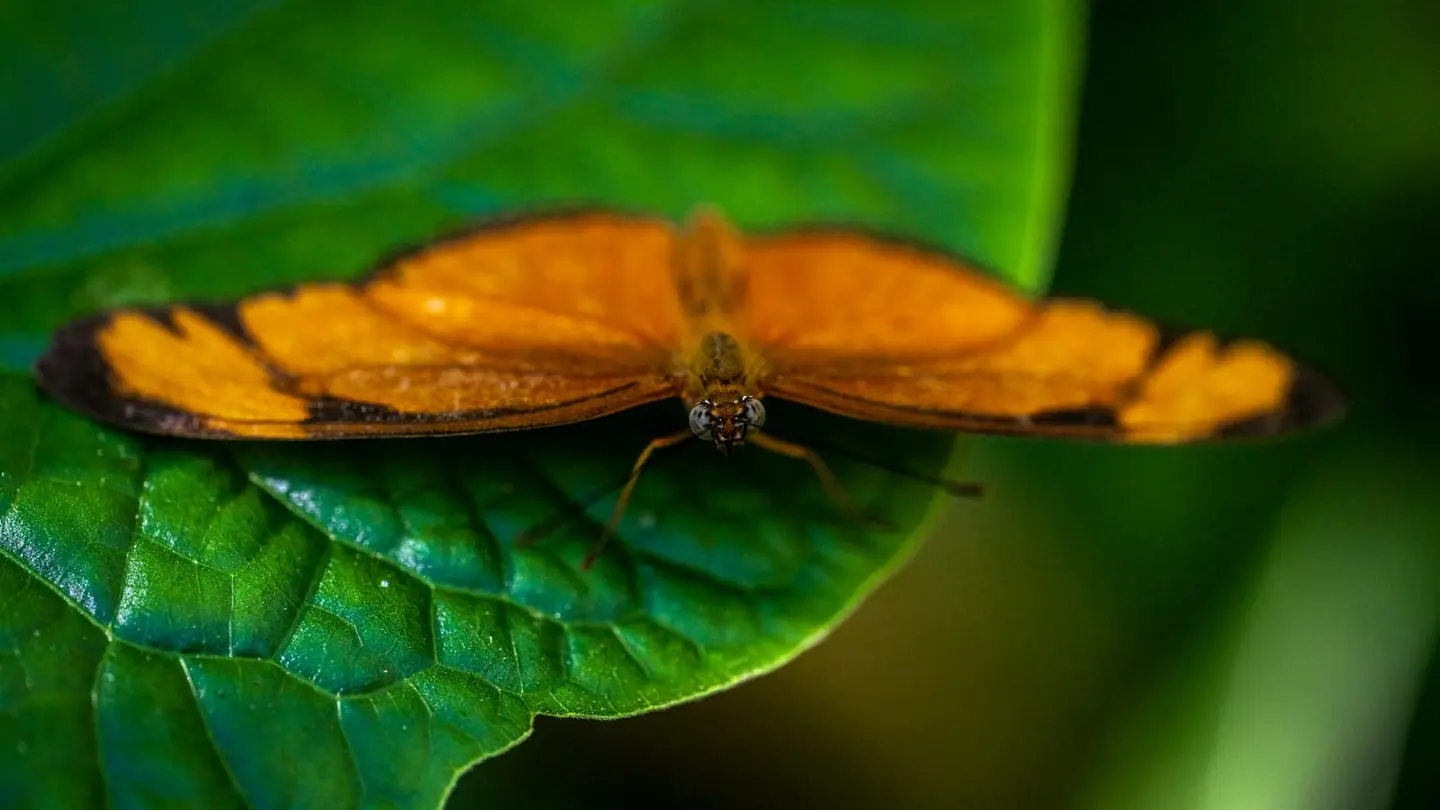
The orange butterfly in the photograph at the top of my About page is a Julia heliconian, Dryas Iulia. On my birthday this year I spent an hour photographing her — she was unbothered by my lens, surrounded by nectar and warm air. In the Amazon, where she belongs, the same species does something I only learned about after the photograph was made — she lands on the eyes of freshwater turtles and drinks their tears.
The behaviour is called lachryphagy — literally, tear-eating. It has been observed since at least the nineteenth century, and the explanation is surprisingly mundane. Inland tropical forests are extraordinarily poor in sodium. Plants don't store much of it; nectar is essentially saltless; rain washes any free salt out of the soil. For a butterfly, sodium is a limiting nutrient, needed for nerve function, eggshell production, and male spermatophore building. A turtle's tears, by contrast, are a small mobile salt-lick. So the butterflies have learned to find them.
[object Object]
Researchers in the Amazon have watched Julia butterflies alight on the head of a freshwater turtle, walk delicately across the snout, and lower their proboscis to the corner of the eye. The turtle, by all accounts, seems to take the visit with the resigned patience of large animals everywhere. Whether the butterfly is provoking the tear flow with a careful brush of the leg or simply taking advantage of what is already there is still a matter of careful observation — but the result is the same, and the popular framing, the butterfly that makes turtles cry, has more truth in it than you might expect.
I think about this every time I look at the photograph. The image shows a recognisable thing — a pretty butterfly resting on a flower in a warm room. It does not show the species' strange ecological history, the salt-poor rainforest she normally inhabits, or the scene of her perched on the slow blink of a snapping turtle on a riverbank in the Amazon. A photograph is always a thin slice through a much stranger world. The work is only ever partly the picture — the rest is what you go looking for after.
[object Object]